A Practical Guide to Unified Team Inbox for Small Businesses
Filed under: Table games, Odds and probability — permalink
Your team is answering customer questions from four different apps on five different phones. Messages get missed, two people reply to the same buyer, and nobody knows who handled what. A shared inbox fixes the chaos before it costs you a sale. There is a more detailed rundown of Whatsapp Business API worth bookmarking.
This guide shows you what a unified team inbox solves, how to connect WhatsApp, Messenger, Instagram DM and a web widget without an IT team, and which features like assignment, collision detection and SLAs actually matter. You will also learn how to compare pricing, automate routine replies, and measure response times so you can scale without overpaying.
What a Unified Team Inbox Actually Solves for a Small Business
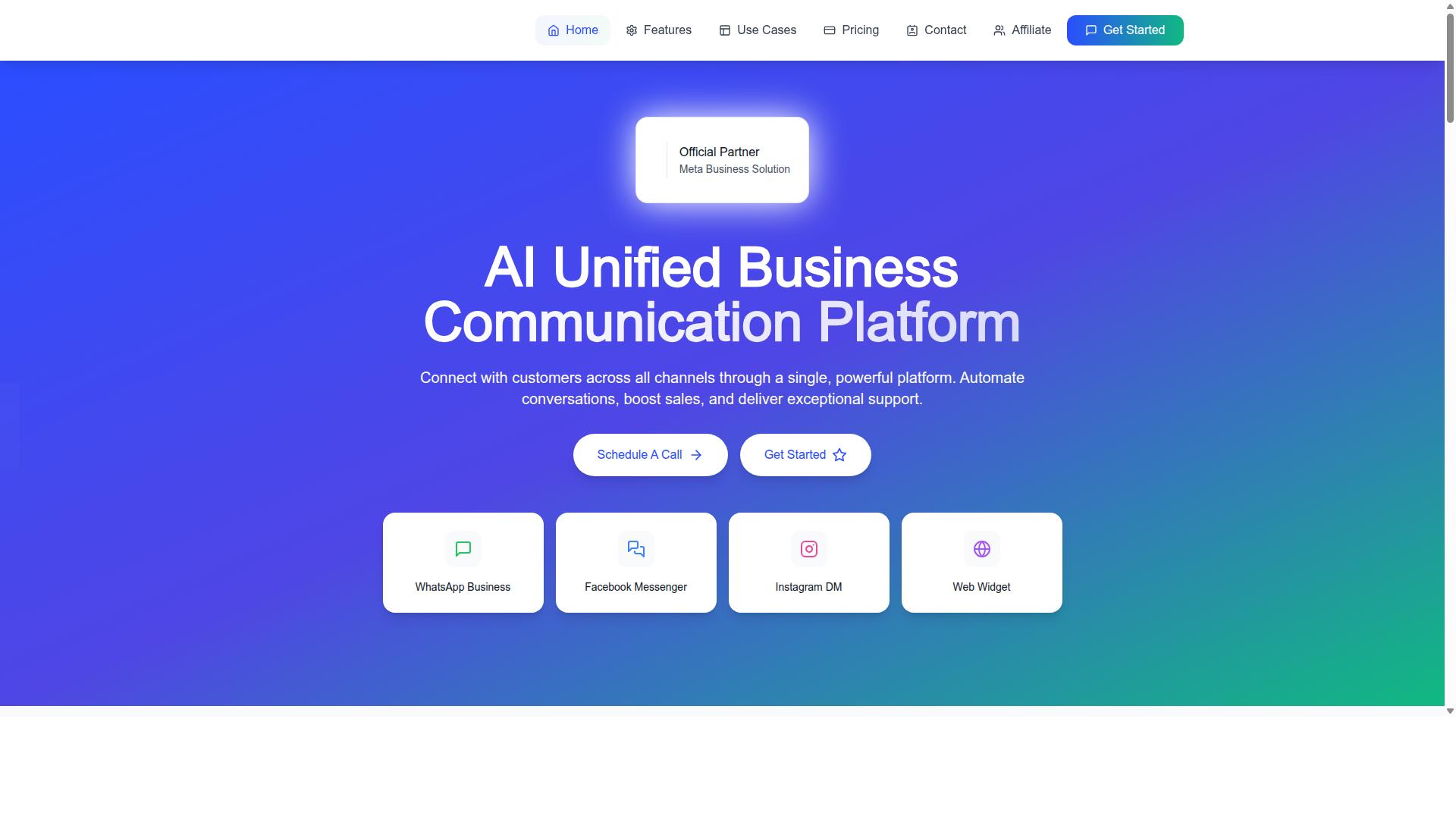
A unified team inbox consolidates messages from email, chat, and social media into one shared workspace, eliminating the chaos of forwarding and CC'ing. Instead of hunting through personal accounts and shared phones, every conversation lives in a single, visible queue.
For a small business, the payoff is straightforward. Fewer messages slip through the cracks, replies go out faster, and it becomes clear who owns each customer query. That visibility is what turns scattered communication into centralised communication the whole team can trust.
The two sections below cover the warning signs that you have outgrown basic tools, and the core features worth prioritising when you evaluate a team inbox.
Signs Your Team Has Outgrown Shared Phones and Personal Accounts
If your team relies on a single shared phone or personal WhatsApp accounts, you're likely missing messages and frustrating customers. These tools were never designed for multiple people handling the same conversations, and the cracks show up quickly.
Watch for these specific signs:
- Customers complain about slow replies. A message sits unread because everyone assumed someone else had checked the phone.
- Messages get accidentally deleted. When two team members use the same WhatsApp account, they can't see who has replied to a customer, and one may clear a thread the other was still working on.
- No one knows who responded. There is no record of which agent handled a query, so follow-ups fall apart.
- Conversations can't be tracked. Without a shared history, you cannot see whether an issue was resolved or simply forgotten.
- Personal and business accounts blur together. Staff use their own numbers, so customer data lives on private devices.
- Handovers are painful. When someone is off sick, no colleague can pick up their conversations.
The risks compound. Lost messages become lost sales, slow replies damage your reputation, and the team wastes hours duplicating effort. A shared inbox addresses all of these by giving every conversation a visible owner and a searchable history.
Core Features to Look For (Assignment, Collision Detection, Internal Notes, SLAs)
When evaluating a unified team inbox, prioritise features that prevent duplicate work and ensure no customer is ignored. Four capabilities matter most.
Assignment rules route conversations automatically. You can send billing questions to one person and technical queries to another, or use round-robin to spread the load evenly. This removes the manual sorting that slows down first reply time.
Collision detection alerts you when two agents are viewing the same conversation. Without it, two people may answer the same customer with conflicting information, which looks unprofessional and confuses the buyer.
Internal notes and @mentions let the team collaborate privately. An agent can ask a colleague for advice or flag an account issue without the customer seeing the exchange, keeping the customer-facing thread clean.
SLAs set response time targets and escalate when they are breached. If a query sits untouched past the threshold, a manager is notified, so nothing quietly expires.
These features are standard in dedicated help desk software but often missing in basic shared inboxes. As you compare options, check whether assignment, collision detection, notes, and SLA tracking are included, since they directly shape response time and resolution time.
Connecting Your Customer Channels in One Place
Customers expect to reach you on their preferred channel, but managing multiple apps leads to fragmented conversations. A query that starts on Instagram may need a follow-up on WhatsApp, and without a unified team inbox, that context gets lost between tools.
Small businesses often juggle WhatsApp, Facebook Messenger, Instagram DM, and website chat as separate silos. The result is missed messages, duplicated replies, and an inconsistent experience that damages trust. A multi-channel inbox brings every conversation into one shared workspace, so your team sees the full picture.
The two sections below cover what each channel demands and how to connect them without hiring a developer.
WhatsApp, Facebook Messenger, Instagram DM and Web Widget: What Each Channel Demands
Each messaging channel has unique quirks that affect how you manage customer conversations. Treating them as interchangeable leads to broken flows and frustrated customers, so it helps to understand the rules of each one.
WhatsApp operates on a 24-hour messaging window. Once a customer messages you, you can reply freely within that period. After it closes, you must use approved template messages to re-engage. The channel also supports rich media, so images, documents, and voice notes are all fair game. In a shared inbox, save channel-specific canned responses for common template scenarios like order updates or appointment reminders.
Facebook Messenger ties directly to your Facebook page. It supports quick replies for fast button-based answers and a persistent menu that gives customers a always-visible set of options. Keep your menu short and route each selection to the right team member through assignment rules.
Instagram DM is visual-first. Story replies often start conversations, and many messages arrive as reactions to a post rather than direct questions. API access remains more limited than other channels, so plan for manual handling of edge cases. Canned responses that acknowledge the original post help here.
Web Widget is your real-time channel. Proactive triggers can start a chat when a visitor lingers on a pricing page, while an offline form captures queries after hours. Route widget chats to whoever is available using round-robin assignment.
Across all four, the goal is consistency. Use canned responses and email templates tailored per channel, and keep internal notes visible so any teammate can pick up a thread without asking the customer to repeat themselves.
Setup and Integration Steps Without an IT Team
You don't need a developer to connect your channels; modern unified inboxes offer guided, no-code integrations. The process follows a predictable path, and most providers design it for non-technical owners.
- Choose a provider that supports all your channels. Check that the customer support software covers WhatsApp, Facebook, Instagram, and web chat before you commit. A tool like Com.bot offers Multi-Channel Support for WhatsApp, Facebook and Instagram alongside its Unified Team Inbox.
- Connect each channel. Most platforms use OAuth, which means you log into the channel and approve access with a few clicks. WhatsApp Business API is different: it requires a provider to connect. Com.bot offers WhatsApp Business API integration and is an Official Meta Business Partner.
- Configure basic settings. Set business hours, welcome messages, and offline responses. Many tools include pre-built templates, so you can adapt rather than write from scratch. Define assignment rules and round-robin routing at this stage.
- Test every channel. Send a message from your own phone and a colleague's account on each platform. Confirm it lands in the shared inbox, that notifications fire, and that replies reach the customer.
Once live, review your first reply time and resolution time weekly. Adjust canned responses and automation rules as patterns emerge, and use internal notes and @mentions to keep team collaboration tight. A centralised communication setup only pays off when the team actually works inside it.
Day-to-Day Workflows: Routing, Ownership and Response Times
A unified inbox is only as good as the workflows behind it; without clear routing and ownership, messages still slip through. The tool gathers every conversation in one place, but someone still has to decide who answers, how fast, and what happens next.
Three habits keep a shared inbox running: routing rules that send each message to the right person, clear ownership so no thread sits unclaimed, and realistic response time targets for first reply and resolution. Together they turn a collaborative inbox into a dependable support channel.
The two subsections below cover the practical side. First, simple automation rules that handle repetitive sorting and replies. Then, keeping order updates, payment requests, and follow-ups inside a single thread so customers never repeat themselves.
Building Simple Automation Rules That Save Hours
Automation rules can handle repetitive tasks like assigning conversations and sending canned responses, freeing your team for complex issues. In most customer support software, rules follow a basic if-this-then-that pattern, and drag-and-drop rule builders mean you do not need technical skills to set them up.
Start with a small set of rules that cover your most common situations:
- Keyword routing: if a message contains "refund assign it to the billing team and tag it as urgent.
- After-hours auto-reply: if a customer writes outside business hours, send a canned response with the expected reply time.
- Round-robin assignment: distribute new conversations evenly across available agents so no one is overloaded.
These three rules alone address the bulk of manual sorting. Round-robin assignment is especially useful for small teams, since it removes the morning scramble of deciding who takes which message. Keyword routing keeps sensitive topics like refunds with the people trained to handle them.
Even simple rules can cut response times substantially. Speed matters: customers who get a fast first reply are more likely to stay patient through resolution. A rule that acknowledges a message quickly, even before a human answers, buys your team breathing room.
Consider a two-person team running a small online store. Before automation, weekend messages piled up until Monday. After adding an after-hours auto-reply and round-robin assignment, every customer received an immediate acknowledgement, and Monday mornings started with a sorted queue instead of a wall of unread chats. The rules took an afternoon to build and have run untouched since.
Tools like Com.bot include an Automation Builder with 1000+ integrations alongside a Visual Bot Builder with drag-and-drop interface, so routing rules and chatbot flows can live in the same place as your conversations. The principle holds regardless of platform: begin with two or three rules, measure whether they reduce manual work, then expand.
Keeping Order Updates, Payments and Follow-Ups in the Same Thread
Customers hate repeating themselves; keeping order updates and payment links in the same conversation thread builds trust and reduces errors. When a customer asks about an order, the agent should be able to answer, request payment, and schedule a follow-up without ever leaving the thread.
This is where integrations matter. A multi-channel inbox that connects to order management and payment systems lets agents pull up order status on the spot. With Native Payments for WhatsApp transactions, a payment link can be sent directly in the chat, so the customer pays in the same place they asked their question.
A simple workflow covers most order-related conversations:
- The customer asks about order status in WhatsApp, Instagram, or another connected channel.
- The agent checks the integrated order system from within the inbox.
- The agent replies with the update and, if payment is outstanding, includes a payment link.
- The agent logs the exchange as an internal note and sets a follow-up reminder.
Internal notes are the quiet hero here. Logging an order update as a note or task means any agent can see the full history, which supports team collaboration with role-based access and prevents the classic small business problem of one person holding all the context in their head.
Tasks.Bot, Com.bot's enterprise-grade task automation platform, reflects the same idea at a larger scale: order updates and payment collection work best when they are tracked as tasks rather than scattered across chat, email, and sticky notes. A single thread becomes the customer's record, and the follow-up reminder ensures nothing is forgotten after the payment link goes out.
The payoff is fewer errors and less repetition. When order updates, payment requests, and follow-ups share one conversation, a customer service query that once took four messages across three channels can be resolved in one clean exchange.
Choosing the Right Plan Without Overpaying
Pricing for unified inbox software varies widely, and small businesses often overpay for features they don't need. A five-person team rarely needs enterprise-grade routing or analytics built for contact centres handling thousands of tickets a day.
Most plans scale along three axes: number of users, connected channels, and premium features. Understanding which axis drives your cost is the first step to avoiding waste.
The two sections below break this down. First, a look at the pricing models and add-ons worth comparing. Then, how Com.bot's plans line up against small business budgets.
Pricing Models and Add-Ons Small Teams Should Compare
Most unified inbox tools charge per user per month, but some also charge per channel or for additional features like automation. Each model shifts the cost burden differently, and the right fit depends on how your team actually works.
- Flat monthly fee: predictable and simple, but you may pay for seats or channels you never use.
- Per-user pricing: scales cleanly as you hire, though costs climb quickly if everyone needs access.
- Per-channel pricing: useful if you only run email and live chat, less so once you add WhatsApp Business or social media messages.
- Usage-based pricing: charged per volume, such as per 1,000 messages, which suits teams with steady, low traffic but punishes seasonal spikes.
Add-ons deserve equal scrutiny. Common extras include additional team members, extra social channels, additional automation actions, and premium support. These line items can quietly double a headline price.
Estimate your growth before committing. A plan that looks cheap at three users may become the most expensive option at ten. Many providers also offer quarterly or annual discounts, so it pays to ask.
How Com.bot's Unified Team Inbox and Plans Fit Small Business Budgets
Com.bot offers a unified team inbox with transparent pricing tiers designed to scale with small businesses. Rather than a per-user monthly model, Com.bot bills quarterly, which can work out more affordable than stacking monthly subscriptions.
| Plan | Price | Notes |
|---|---|---|
| Silver | $149 per quarter | Entry tier |
| Gold | $349 per quarter | Recommended |
| Platinum V1 | $2500 per quarter | Highest tier |
Add-ons are priced individually at $10 per month for an additional team member or social channel. Other add-ons include external actions, bot triggers, and an ecom store.
The Gold Plan is often the best fit for small teams. It sits well below the Platinum V1 tier while offering more room to grow than Silver, making it a practical middle ground for businesses handling customer queries across several channels.
Two inclusions matter here. Com.bot provides WhatsApp Business API integration and native payments, capabilities that are frequently sold as add-ons or higher-tier features elsewhere. WhatsApp messaging is also billed at actual Meta rates with no markup, which keeps multi-channel inbox costs easier to predict. Dedicated support is available separately if needed.
Measuring Results and Scaling Your Inbox
To justify the investment in a unified inbox, you need to track the right metrics and know when to scale. A shared inbox changes how a small team handles customer queries, but without measurement you cannot tell whether response times are improving or slipping.
Metrics turn guesswork into decisions. They show where bottlenecks sit, which channels create the most work, and whether your current staffing matches demand. They also give you a factual basis for budget conversations.
This section covers two things. First, the key metrics worth tracking in any team inbox. Second, the signals that tell you it is time to add team members, open new channels, or deepen your automation.
Metrics That Matter: First Response Time, Resolution Rate, Repeat Contacts
First response time, resolution rate, and repeat contact rate are the three metrics that most directly impact customer satisfaction. Each one is simple to calculate and each one points to a different part of your workflow.
First response time is the average time between a customer's first message and your team's first reply. Add up the wait for every conversation in a period, then divide by the number of conversations. Many support teams aim to reply to live chat within a few minutes during business hours, while email can tolerate a longer window. What matters is that your target is written down as an SLA and visible to everyone.
Resolution rate is the percentage of conversations closed without the customer reopening them. Divide fully closed tickets by total tickets. A low rate often signals unclear answers, missing internal notes, or queries routed to the wrong person.
Repeat contacts measure how often a customer writes again about the same issue. A high figure usually points to a fix that did not hold or a reply that missed the real question.
Use these numbers together to find bottlenecks. Slow first replies suggest staffing or assignment rules need attention. Poor resolution rates hint at training gaps or weak canned responses. Rising repeat contacts may mean your email templates and automation rules are too generic. Many unified inbox platforms include built-in analytics dashboards, so the data is often already there. Review it weekly rather than monthly, and act on one metric at a time.
When to Add Team Members, Channels and Deeper Automation
Scaling your inbox isn't just about adding people; it's about knowing when to add channels and automation to maintain service quality. Gradual, data-driven growth keeps costs predictable and prevents the chaos of sudden expansion.
Watch for three signals:
- Add team members when average response time drifts past your SLA, or when agents are consistently at capacity with no slack for spikes.
- Add channels when customers ask for them directly, or when you enter a new market where a platform like WhatsApp Business or SMS support is the norm.
- Add deeper automation when repetitive queries make up a large share of volume. If the same handful of questions keeps arriving, automation rules and bot triggers can absorb them.
Cost control matters here. Com.bot's add-ons run at $10 per month for an additional team member, social channel, external actions (per 5000), bot triggers (per 25000), or ecom store. That structure lets a small business expand one piece at a time instead of jumping to a bigger plan before it is needed.
Plan additions against your metrics, not your instincts. If first response time is healthy and resolution rate is strong, you may not need another person yet. If repeat contacts keep climbing despite a full team, the answer is probably better automation or clearer canned responses, not more headcount. Revisit the numbers after every change so you can see what actually helped.